Uber · App · Mobile user acquisition
Uber Case Study: How Smarter Mobile App Marketing Turns Installs into Active Customers
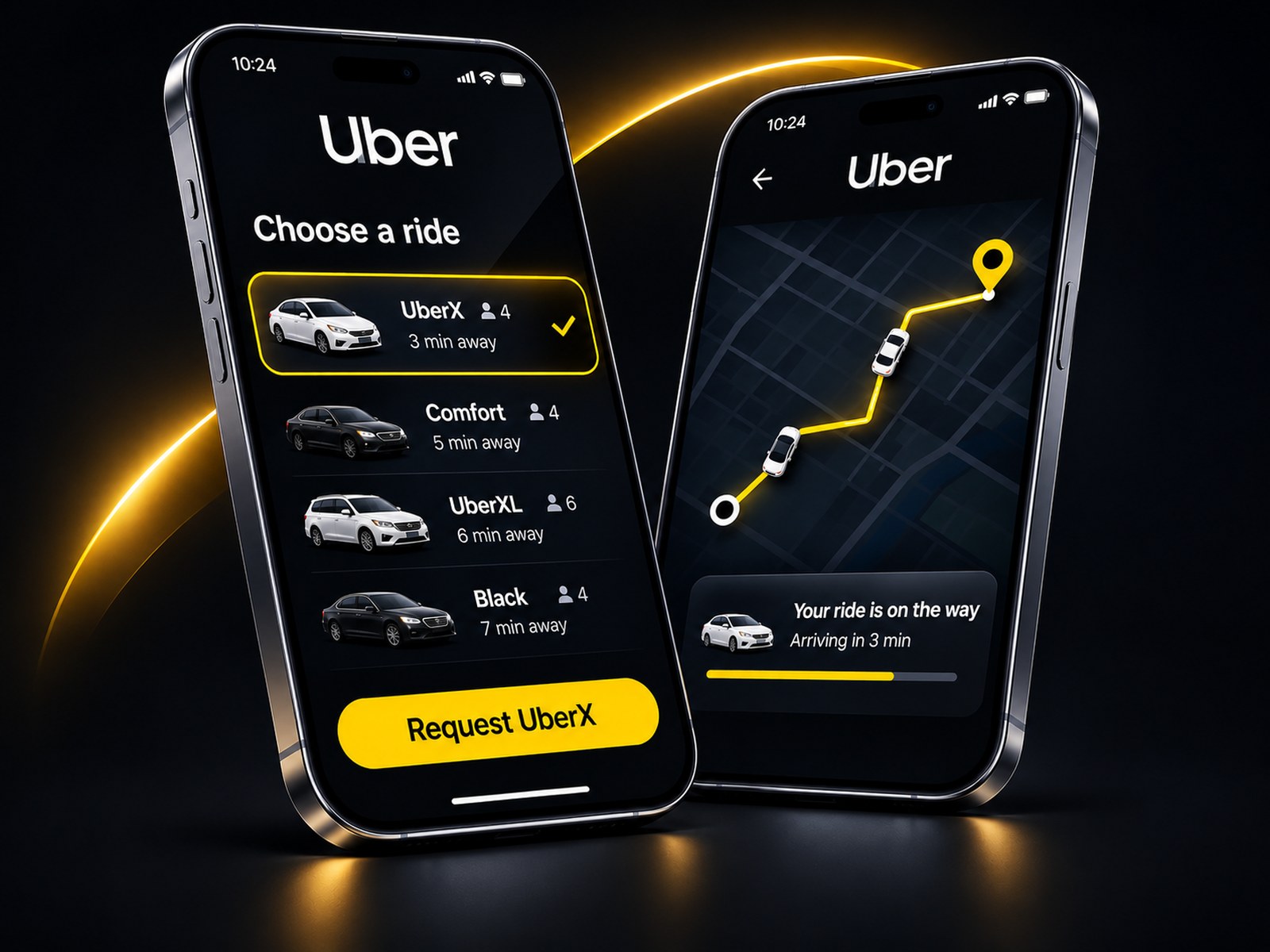
Beyond app installs: building a more efficient user acquisition strategy, from the first download to the first completed ride.
00
Beyond app installs
Beyond App Installs: Building a More Efficient User Acquisition Strategy
In mobile app marketing, generating downloads is only one part of the growth equation. The real challenge is acquiring users who engage with the product, complete the onboarding process, and ultimately become paying or active customers.
For a platform like Uber, where business growth depends on user activity and repeat transactions, the difference between an app install and a completed first ride is significant.
Our strategic focus was to improve the efficiency of mobile user acquisition while strengthening the conversion journey from the initial app installation to the first completed ride.
The strategic challenge
The Strategic Challenge: Acquisition Efficiency vs. User Quality
Mobile advertising campaigns often prioritize volume: more impressions, more clicks, and more installations. However, increasing download volume does not necessarily translate into sustainable customer acquisition.
A successful mobile app marketing strategy must address several interconnected challenges:
The objective was to move beyond traditional app install optimization and establish a strategy focused on meaningful user acquisition.
Our approach
Our Approach: Connecting Media Buying with the Full Conversion Funnel
Intelligent Mobile User Acquisition
We approached user acquisition as a continuous optimization process rather than a simple download-generation activity.
Campaign structures, audience segmentation, bidding strategies, and budget distribution were evaluated to identify opportunities for more efficient acquisition across relevant paid media channels.
The focus was not simply on acquiring more users, but on improving the relationship between advertising investment and the quality of acquired traffic.
Reducing CPI Through Continuous Campaign Optimization
Cost Per Install is an important indicator of acquisition efficiency, but reducing CPI requires more than lowering bids.
We focused on improving campaign performance through audience analysis, creative experimentation, placement evaluation, and ongoing budget optimization.
This allowed acquisition decisions to be guided by campaign quality and downstream conversion signals rather than installation volume alone.
Creative Strategy as a Growth Driver
In highly competitive app categories, creative strategy plays a fundamental role in user acquisition.
We evaluated different messaging approaches, visual concepts, and advertising formats to understand which combinations attracted relevant audiences and generated more efficient installations.
Continuous A/B testing helped identify opportunities to improve engagement, increase advertising relevance, and reduce acquisition costs.
Optimizing the Journey from Install to First Ride
One of the most important distinctions in mobile app marketing is the difference between acquiring an installation and acquiring an active customer.
We focused on understanding the conversion journey across key stages:
By shifting the optimization focus toward deeper funnel events, the strategy aligned media acquisition with a more meaningful business outcome: getting new users to complete their first ride.
Data-Driven Growth and Conversion Measurement
Effective mobile user acquisition requires visibility beyond the initial installation.
We emphasized the importance of tracking and evaluating metrics such as:
This approach creates a clearer understanding of where acquisition costs are generated, where users drop off, and which campaign optimizations can contribute to stronger conversion efficiency.
The business impact
The Business Impact: Measuring What Actually Drives Growth
The strategic direction focused on improving two critical dimensions of mobile growth simultaneously:
Acquisition Efficiency
Reducing the cost of generating app installations while improving the quality of acquired users.
Conversion Performance
Increasing the proportion of acquired users who progress through registration and complete their first ride.
Rather than treating downloads as the final objective, this approach connects paid media investment with the customer acquisition journey and the actions that create business value.
Key takeaway
Key Takeaway: App Growth Is About More Than Downloads
Scaling a mobile application requires a deeper understanding of the relationship between media buying, user behavior, creative strategy, and conversion optimization.
A lower CPI is valuable, but its impact becomes significantly more meaningful when it is accompanied by stronger user activation and a higher rate of first-time transactions.
At Impact Media AI Marketing Agency, we approach mobile app marketing with this broader perspective: connecting user acquisition strategies with measurable business outcomes.
We don't look at app installs in isolation. We focus on building more efficient acquisition systems that turn advertising investment into active users and sustainable app growth.
LET'S MAKE AN IMPACT.
Let's Build Your Next Impact Story.